
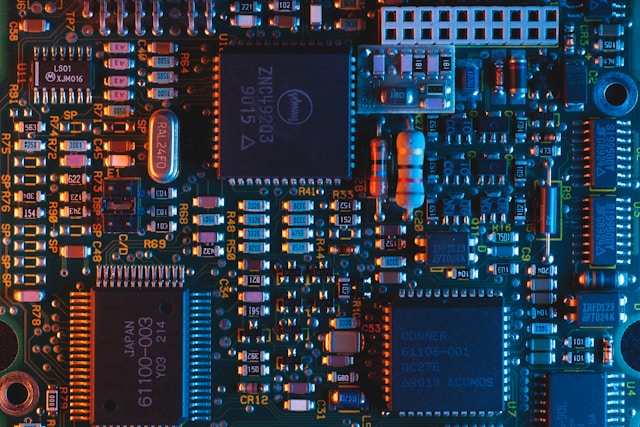
The advent of 5G technology marks a significant milestone in the evolution of digital connectivity, promising to revolutionize the way businesses operate and how individuals communicate. As the fifth generation of wireless technology, 5G offers unprecedented speed, ultra-reliable low latency, massive connectivity, and enhanced capacity, opening new avenues for innovation across various industries. This comprehensive analysis explores how 5G is transforming business operations and communication practices, creating opportunities for growth, efficiency, and competitive advantage.
I. Introduction to 5G Technology
Understanding 5G
5G, or fifth-generation wireless technology, builds upon the foundations laid by previous generations like 4G LTE and 3G. It introduces advanced features such as higher data transfer rates, reduced latency, and the ability to connect a vast number of devices simultaneously. Unlike its predecessors, 5G is designed to support not only mobile broadband but also the burgeoning Internet of Things (IoT), autonomous vehicles, smart cities, and industrial automation.
The Drive for 5G Adoption
The global demand for faster, more reliable connectivity is driven by the proliferation of connected devices, the rise of remote work, and the increasing reliance on data-intensive applications. Governments, telecom operators, and technology companies are investing heavily in 5G infrastructure, recognizing its transformative potential for multiple sectors.
II. Impact of 5G on Business Operations
A. Enhanced Internet of Things (IoT) Integration
One of the most significant impacts of 5G on business is its ability to facilitate the expansion of IoT ecosystems. With 5G’s capability to connect millions of devices per square kilometer with minimal latency, industries can deploy smart sensors and devices in real-time environments. For example, manufacturing plants utilize IoT sensors for predictive maintenance, reducing downtime and operational costs. Logistics companies deploy connected vehicles and tracking systems to optimize routes and inventory management.
B. Automation and Industrial Innovation
5G empowers industries to adopt automation at an unprecedented scale. Autonomous robots and machinery in factories can communicate instantaneously, leading to smarter manufacturing processes. This not only boosts productivity but also enhances safety by minimizing human intervention in hazardous environments. Additionally, 5G supports the deployment of edge computing, enabling data processing closer to the source, which reduces latency and enhances real-time decision-making.
C. Supply Chain Optimization
The low latency and high bandwidth of 5G facilitate real-time tracking and monitoring of products throughout the supply chain. Companies can leverage 5G-enabled RFID tags and sensors to improve inventory accuracy, reduce theft, and streamline logistics operations. This results in more responsive supply chains capable of adapting quickly to market demands.
D. Innovations in Customer Experience
Businesses are leveraging 5G to enhance customer engagement through immersive experiences like augmented reality (AR) and virtual reality (VR). Retailers, for example, can offer virtual try-ons, interactive displays, and personalized shopping experiences that are faster and more seamless thanks to 5G connectivity.
III. Revolutionizing Communication Practices
A. Faster and More Reliable Mobile Networks
5G dramatically improves mobile broadband, providing users with significantly faster download and upload speeds. This enables high-quality video streaming, instant file sharing, and seamless video conferencing, even in crowded areas such as stadiums, airports, or urban centers. For remote workers and digital nomads, this means more stable and efficient communication tools, reducing downtime and enhancing productivity.
B. Enabling Remote Work and Virtual Collaboration
The COVID-19 pandemic accelerated the adoption of remote work, and 5G further enhances this trend by providing the reliable, high-speed connectivity needed for virtual meetings, real-time collaboration, and cloud-based applications. With 5G, organizations can deploy more advanced remote working solutions, including high-definition video conferencing, augmented reality (AR) training sessions, and large file sharing without latency issues.
C. Impact on Media and Content Delivery
Content consumption is also transformed by 5G, which enables ultra-high-definition streaming and immersive experiences. Streaming platforms, broadcasters, and content creators can deliver richer media content, including 4K/8K videos, virtual concerts, and interactive gaming, directly to mobile devices with minimal buffering and lag.
IV. Industry-Specific Transformations Driven by 5G
A. Healthcare
In healthcare, 5G supports telemedicine, remote surgeries, and real-time patient monitoring. High-speed, low-latency connections allow doctors to perform remote diagnostics and surgeries with robotic systems, expanding healthcare access to underserved regions.
B. Automotive
Autonomous vehicles depend heavily on 5G for real-time communication with other vehicles and infrastructure, ensuring safety and efficiency. Smart traffic management systems utilize 5G to reduce congestion and improve urban mobility.
C. Manufacturing and Industry 4.0
Factories are becoming smarter with 5G-enabled machinery, robotics, and sensors that communicate in real time. This accelerates Industry 4.0 initiatives, fostering highly flexible, efficient, and autonomous production lines.
D. Smart Cities
Cities leverage 5G to deploy connected infrastructure such as intelligent traffic lights, security cameras, public Wi-Fi, and environmental sensors. These initiatives improve urban living conditions, reduce energy consumption, and enhance public safety.
V. Challenges and Considerations
While 5G offers substantial benefits, there are challenges to its widespread adoption. Infrastructure development requires significant investment, and concerns over security, privacy, and data protection are paramount. Additionally, the digital divide may widen if rural or underserved areas lack equitable access to 5G networks. Overcoming these hurdles requires coordinated efforts among governments, industry stakeholders, and communities.
VI. Future Outlook and Conclusion
The transformative potential of 5G technology is vast, promising to redefine the landscape of business and communication. As the infrastructure matures and devices become more affordable, organizations across all sectors will increasingly harness 5G to innovate, optimize operations, and deliver superior experiences to customers and stakeholders. From autonomous vehicles and smart factories to immersive virtual experiences, 5G is poised to accelerate digital transformation, fostering economic growth and societal progress.
In conclusion, 5G technology is not just an evolution of wireless communication but a revolution that will reshape how the world interacts, works, and innovates. Businesses that proactively adapt to this new paradigm will gain a significant competitive edge, positioning themselves at the forefront of the next wave of technological advancement.

